Showing posts with label paleo. Show all posts

Thursday, November 24, 2011

Squirrel Stew (also known as Brunswick Stew)

You're going to want to start this recipe really early in the morning because it will take approximately nine hours to make, most of that simmering on the stove. The squirrel can be frozen. I had harvested the squirrels I used to make this a couple months prior and they were stored in freezer bags in the freezer. See youtube on how to field dress a squirrel (not kidding, that's how I learned!)

  • Five squirrels, skinned, field dressed and quartered
  • 2 qts chicken stock
  • water
  • 4 T. salt
  • 4 tsp black pepper
  • 2 tsp cayenne pepper

  • 2 medium sized onions
  • 3 medium sized potatoes
  • 1 can corn
  • 2 c. frozen or fresh lima beans
  • 2 c. frozen or fresh okra
  • 3-4 carrots
  • 3-4 celery stalks
  • 5 c. cherry/porter tomatoes


In a very large pot, first put squirrel meat in the broth adding enough water to cover the meat. Add salt, black pepper and cayenne pepper. Bring to a boil and then reduce heat so it is lightly boiling. Cook meat for about three to four hours, adding water as needed, until the meat falls off the bones.

Using a slotted spoon, remove meat from stock. Add vegetables to stock, all of them should be well diced. You can use any vegetable really, but NOT rice. Rice is never used in Brunswick stew.

Next, remove meat from bones (this can take a while) and then add meat back into pot. Add more salt to taste. Let simmer/lighthly boil, stirring fairly often (it will stick to the bottom of the pot) until vegetables are reduced to mush. Add water as needed. You can make this the day before you need it and reheat it on the stove.

This recipe is really, really good and based on one from a late 19th century cookbook. My husband does not like fried squirrel, but he did love this stew. The long cook time takes a lot of the gaminess out of meat. You might use this recipe for other game meats as well.

Tuesday, May 24, 2011

Wednesday, May 18, 2011

Vegan Bacon

At Hunter-Gatherer.

Who would eat such crap? That's what I'm asking. Look, I've said it before and I'll say it again, if you want to wreck your health being vegan, well fine. Go for it, but why would you eat something that is manufactured by some corporation and that doesn't even resemble food?

Veganism is one of THE stupidest things that exist, and the people who follow it like a religion are even stupider. I understand if you do it for "ethical" reasons (which I think is misguided but whatever), but it certainly ought not be for "health" reasons since it's one of the most unhealthful diets you can eat, right after the Standard American Diet. I blame the lack of saturated fat. Saturated fat is really important for developing and maintaining cognitive function. So is cholesterol, but I digress.

The thing that really burns my biscuits though, is that vegans act like theirs is the natural diet man is supposed to be eating. This couldn't be further from the truth. Do you think that paleolithic man had greens, bananas and other stuff that only grows for part of the year in most places, shipped to them from a tropical location? They ate meat and lots of it. Some archaeologists think that paleolithic people were partially responsible for the mass extinction of mega-fauna at the end of the paleolithic.

If one wanted to be "ethical" about the way we treat this planet, they would eat local. They'd eat what was in their back yard. Of course, that would require having a back yard. I despise living in a city. I've done it, and I really don't like it. The only place I despise living more is in the suburbs. The neighbors are always a bunch of wackos.

If you eat vegan bacon, I'd suggest finding some real food to eat instead. The ingredient list on this vegan bacon reads like any other crap-in-a-box you might find in the frozen food section. Hint: soybean oil is very bad for you

Saturday, April 16, 2011

Squirrel Lunch

I harvested my first squirrel yesterday and we fried it up today for lunch. I had never had squirrel before, but my dad and my in-laws grew up eating it. I have to say I liked it and I'll probably try to harvest another one soon. The little bastards tore up our deer feeder last year and that means we have too many running around.

Some cities also have too many running around and they won't even let the residents do anything about it. A elderly neighbor of my uncle in Austin contracted typhus, which was probably transmitted by fleas living on the squirrels that have overrun the town since it's illegal to kill them. A female squirrel can have six offspring a year, so without predators, that quickly gets out of control. You can nearly kill little old ladies but you can't have squirrel for breakfast. Makes me glad I live out in the country.

Anyway, all this squirrel hunting made me think about how things used to be and why the amount of meat they say our ancestors ate is probably a huge under-estimation. Our grandparents and their parents, unless they lived in some place like New York City, did not rely on grocery stores for food. They also did not rely on huge commercial farms that grow genetically modified crops that can withstand bad weather. Go out in the woods and tell me how much you can gather. It ain't much. You're way better off trying to hunt something than to find edible plants, at least where I live. Our ancestors may have relied on other farmers or other hunters, but most of their food was not grown far away. Most people who lived out in the country hunted whatever they could get their hands on and it was never counted by USDA morons. Nowadays you'd probably go to jail if you tried selling meat to the neighbors, but I digress.

I thoroughly suggest for all you paleo types out there to go hunt your own food if it's possible. There's nothing like being out in the woods on a lovely spring morning. I know some people live where it's not possible, and all I can say is, I feel terribly sorry for you ;)

“Any woman who does not thoroughly enjoy tramping across the country on a clear, frosty morning with a good gun and a pair of dogs does not know how to enjoy life.” ~Annie Oakley

Monday, April 4, 2011

Lies, and the Vegans that tell them

I've been busy the last few days and haven't had a chance to write anything. While going through my email tonight, I have yet more spam from the Eat Right America morons. Tonight's theme was too much not to write about. It basically said I should eat less meat but they weren't trying to promote veganism. Yeah and I'm the Pope. {/snark}

The thing though that prompted me to write though is this, they lie. Liars, liars, pants on fire. (Should I be surprised? Probably not, most people propagating the vegan diet have to lie because if they told the truth, few would be vegan.) So what reason do they give for eating less meat?
"In fact, [animal products] are rich in substances that scientific studies have shown to be associated with incidence of cancer and heart disease: saturated fat, cholesterol and arachidonic acid, an inflammatory acid found only in animal products." [emphasis mine]

Ah yes, the big old boogie men of saturated fat and cholesterol. We already know that's BS, but what is this arachidonic acid? Only an essential fatty acid, vital for visual and cognitive development of infants and found in breast milk. In fact, if the mother is deficient they need supplementation. Arachidonic acid is vital for neural function. And these asshats are basically saying you don't need it.

See this kind of crap makes me madder than hell. Why, do you ask? Because these idiots have an air of authority, and many people who read this crap will take them at their word without looking into what the thing actually does.

They go onto say that meat causes osteoporosis. Yes, you read that correctly, I'm not making this up.
"In addition, animal products are very acidic for the body and cause calcium to be released from the bones to help neutralize the acid in the blood. This in turn leads to calcium loss and weak, brittle bones."
That's gotta be the biggest load of BS that I've read. And do they quote a source, a study? Hell no, of course they don't. If it were true, that eating animal products made your bones brittle, then body builders would be breaking bones all the damned time because most of the ones that I've read on the internet are eating paleo. These idiots just keep piling it on. Forget the shovel, someone get them a backhoe so they can dig their lying asses deeper faster. Maybe the pit they're digging will cave in and bury them. But remember, they're not advocating a vegan diet by any means. *rolls eyes*

Tuesday, March 29, 2011

The problem IS veganism

Props to Free the Animal:

Only in the "civilized" world would people be so stupid as to prescribe to a diet that would kill their child.

And only in the "civilized" world would people make excuses and say that it's not the diet that killed the baby since there are plenty of healthy vegan babies. That's a bunch of codwallop. The diet did kill the child, and the parents believed said codswallop. In both English and French press, there are people saying it's not the diet that killed the baby, but something else that was responsible, like the parents' ignorance, etc. I won't say it wasn't their ignorance that killed it, indeed it was. Ignorance that a diet that leaves you deficient could possibly be good for their infant daughter.

Let's explain this in terms that even a child should understand. Vitamin B12 deficiency can kill you. Vitamin B12 is found only in animal products. Therefore, many vegans are B12 deficient. As an adult, you have a store of B12 that might take years to deplete. If you metabolize B12 well, you might never become deficient. If you don't metabolize it well, you might become very sick.

A child has no choice. A child also does not have the vitamin stores that an adult has. I'm not going to beat around the bush and pander to your PC sensibilities. You are an absolute idiot to be vegan while pregnant or nursing.Ask any pediatrician. I blame a lack of saturated fat, which so happens to be essential for brain development. I think it makes them have a hard time thinking. If you're an adult and you want to be vegan, more power to you. Go for it. It's a free world. If you get sick and die, that was your choice. But don't damage your child's health by having them be as well. And the stupid thing is, you don't have to eat meat to get vitamin B12, you could be vegetarian. So long as you consume cream and eggs, you'd be fine.

Why must another child die for a lie? The lie is that veganism is healthy. It isn't.

Wednesday, March 23, 2011

Lard Mayonnaise

I had read somewhere online that you could make mayonnaise from lard. And indeed, you can. But, just because you can do something, doesn't mean you should. The thing is, it didn't taste too bad right when we made it, when it was warm. I thought it was a bit strong but okay. But then we refrigerated it, and used some of it later. It was disgusting, for lack of a better word. I'm not sure why, but I suspect it may be because when there's a lot of fat in a food, it's usually better heated up.

So, if you're thinking about trying it, I wouldn't.

Tuesday, March 22, 2011

The Difference a Few Years Makes

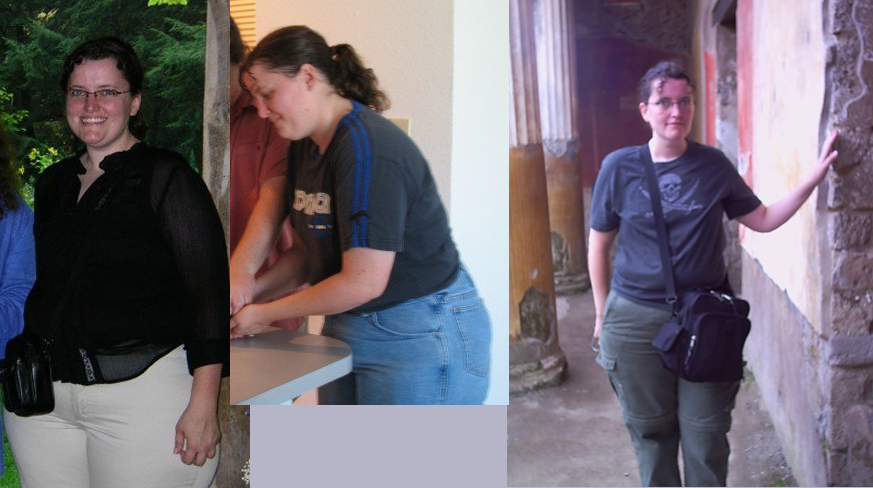
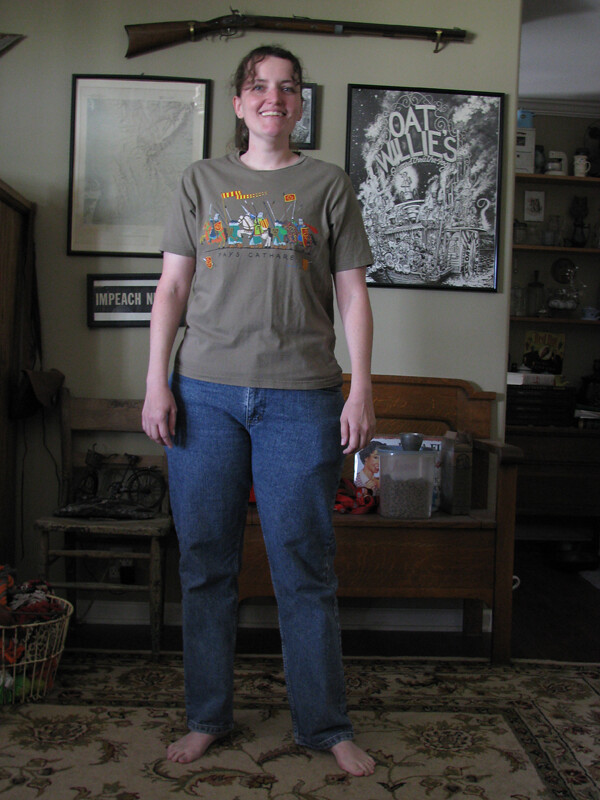
I got to looking at some pictures of myself from a few years ago, and I have to tell you, I see a huge difference. In fact, my own mother nearly didn't recognize me when I posted a picture on facebook a couple of months ago. That says something I think. I haven't seen my mom in four years because I live so far from her, and I've lost a lot of weight since then.


The picture on the left of me was taken at my brother-in-law's wedding in July 2006. I could barely squeeze into a size 42 in men's. I had gained weight like mad at school, and struggled to keep from gaining any more, much less lose any. The picture in the middle is me in October 2006. The picture on the right was taken at Pompei in May 2009. You can see at that point I had lost some weight but it was a struggle to keep it off. I gained back somewhere in the neighborhood of ten to fifteen pounds right after my trip.

This is me today. I wear a 34 in men's.


And I don't have any pictures of me from when I was really heavy. That was before there were digital cameras. I think my mom may have some. I really tried to avoid ever having my picture taken then.

Hubby has lost a lot of weight too, but he forbids me to post any pictures of him LOL We've both lost all this weight, and haven't been hungry to do it. We've also been rather lazy and haven't even worked out. I do need to get motivated into a walking routine again. I think it would help me lose the rest of the weight I need to at a quicker pace, and maybe tone up the backside some ;)

Anyway, as they say, the proof is in the pudding, or in this case, in the pictures.

Thursday, March 17, 2011

Low Carb should not be High Protein

Over at Primal Wisdom I read this post today. I have my own comments on the news article, which can be found here. I really wanted to read the original journal article, but it's new and the library doesn't have a subscription to the journal. Going off the abstract, it sounds first of all like a bullshit study.

Why? Well let's start with this. The assumption that a low carbohydrate diet is high in protein. It isn't. Or shouldn't be anyway. Unless you're a body builder. A low carbohydrate diet should be high in fat, not protein. The amount of protein they fed these 17 obese men is more than I consume on a typical day, some days by double. My protein intake is generally 70g to 130g. They fed these men 137-139g of protein.

My other main problem with this study, and why I think it's really irrelevant without even having to read it, is it's short duration and it's use of 17 men as subjects. Under powered and sexist to boot LOL

I think it's an obfuscation, what they're doing. They're attacking animal protein by attacking the low carbohydrate diet. In the case of the above study, I assume that they fed the people in the low carbohydrate group primarily animal protein. How else would you keep your carbohydrate count so low?

This whole attack on animal protein brings me back to something I was reading last night. They blame the protein in dairy for cancer. How did they come to that conclusion? By feeding people skim milk. The study I was looking at also lumped "all dairy" together and implied that "all dairy" had protein.
"Except for cheese with an insulin score of 45, milk and all dairy products including yoghurt, ice cream, cottage cheese, and fermented milk products have potent insulinotropic properties."1 [emphasis mine]

All dairy? Really. What about butter? Heavy cream? They have no protein. They have very little lactose, if any. You tell me how that's possible. I say it isn't. I say someone has an agenda and it's against animal products. Gee, I wonder who would have an agenda against animal products. I'll let you draw your own conclusions on that one.
"In a one-week intervention study of 24 pre-pubertal eight-year-old boys the effect of daily intake of 53 g of either lean meat or skim milk (1.5 l per day) was studied with regard to insulin and IGF-1 responses. In the skim milk group insulin significantly increased by 105% (from 22 to 45 pmol/l) and IGF-1 significantly increased by 19% (from 209 to 249 ng/ml) [12]. There was no significant increase in either insulin or IGF-1 in the meat group."1 [emphasis mine]

Of course their insulin levels are higher in the skim milk group, the meat didn't have sugar (lactose) in it, and second of all, skim milk is not milk as you drink it from the cow. I mean, how stupid does one have to be? I went back and looked at the study that they're talking about, and talk about some confounding variables. The children were allowed to choose the diet they ate. Yes, you read that correctly. The children ate whatever they wanted, and simply were required to drink 1.5 liters of skim milk (12 of the boys) or eat 250g of low fat meat (the other 12). Consuming the milk apparently raised their IGF levels. But did it? Was it the milk? The protein in the milk? The lactose in the milk raising their insulin levels? The lack of fat in the milk so there was nothing to mediate their insulin levels? Some other dietary factor since there was no set diet? I mean, it could have been anything. I won't even get into the fact that it's under-powered and was only one week in duration.

Is drinking a large quantity of skim milk good for you? Hell no. I say you should never drink skim milk. If you want to consume milk, make sure it's whole, and better yet is straight from a dairy cow, not processed commercially.
"Milk consumption results in a significant increase in insulin and IGF-1 serum levels comparable with high glycaemic food. Insulin induces hepatic IGF-1 secretion, and both hormones amplify the stimulatory effect of GH on sebocytes and augment mitogenic downstream signalling pathways of insulin receptors, IGF-1 receptor and fibroblast growth factor receptor-2b."2

In other words, is it really the protein alone, or is it more likely that it's the lactose? And when they say "milk" do they mean skim, whole, or what? Because each kind should in theory have a completely different effect on your insulin levels.

One place to look for good information on what ketogenic diets do is in the one place that they're standard and acceptable. And that is in the treatment of epileptic seizures. About half of people, children included, will have a positive response to a ketogenic diet in helping control their seizures. This study found that IGF-1 was greatly reduced in a ketogenic diet, to the point where it stunted the growth of the children.3 A ketogenic diet is extremely low carb, basically near zero carb and low protein too (it's a high fat diet), and these children undertook it because being short is preferable to having seizures.

In fact, a lot of the literature is rife with making low carb synonymous with high protein. Like this study where they fed mice more protein than fat (46% v. 35% respectively). That's a lot of protein. Not to mention it throws in a confounding variable, so that when they declare that low carb diets do not slow tumor growth, one has to wonder how they know this. If they had fed them a higher fat diet, they might have noticed some benefit, since we know that protein affects insulin production, and insulin levels are probably a driving force behind a lot of nasty things. In fact, in this study IGF-1 was higher in the low carb group than in the high carb group, and I'm sure that is due to the protein, since insulin drives IGF.

So the point of all this? When eating a low carb diet, it should be primarily animal fat (none of that synthetic vegetable crap), your protein should probably be 15-20% depending on your activity level, and your carb count should be as high as you can tolerate and still lose/maintain weight. And don't listen to stupid journalists, and be wary of researchers, because I don't think most of them know what they're talking about.


References:

1. Milk - The promoter of chronic Western diseases. Medical Hypotheses 2009; 72(6): 631-639

2. Role of insulin, insulin-like growth factor-1, hyperglycaemic food and milk consumption in the pathogenesis of acne vulgaris. Experimental Dermatology 2009; 18: 833–841.

3.Growth dependence on insulin-like growth factor-I during the ketogenic diet. Epilepsia 2009; 50(2): 297-303.

Wednesday, March 16, 2011

Exercise away the plateau?

I have to admit it, I'm lazy as hell. I've never been all that keen on exercising, or when I was a kid, playing. Back then, I liked to stay inside and read instead.

One summer when I was in college, I did a summer program where I was a camp counselor glorified baby sitter for high school students. We were expected to stay in the dorm pretty much around the clock with the kids. The gym however, was an acceptable place to be if we weren't in the dorm. So I started going to the gym to get the hell away from the dorm and the kids. I exercised everyday almost for about two or three hours. I had never been to the gym so much in my life. Why did I do this? I'm sure you've heard of the 'freshman 15' where the new college student gains fifteen pounds from eating the crap that Sodexo (used to be called Sodexho), or some similar food service, serves. I had gained something like 90 pounds in the two years that I had been at school. I never thought I particularly stuffed my face. I simply ate until I wasn't hungry. Skinny people do that all the time and don't gain weight. Anyway, I was approaching 250 pounds, and this after I had been down to 163 pounds (after eating Atkins no less!), from a high of 270 pounds when I was in high school. Let's just say, I wasn't having any of it.

This is before I understood how low carb works, so in addition to going to the gym I cut back my food intake. I was hungry all summer, but I lost twenty-five pounds (which left me at about 225 pounds) and in the end found it easier to do the elliptical machine for nearly an hour. I also lifted weights too. The last time I went to the gym, which was just before school started for the fall, this skinny bitch approached me and told me that I ought not to lift weights until I had lost more weight. Really? People seem quite capable of poking into your personal business. I shut her up by telling her my doctor had told me to. Well, I didn't have a doctor, but most doctors would tell you that resistance training is beneficial, especially if you're overweight.

I stopped going to the gym because during my senior year, I barely had time to sleep, much less exercise. I did maintain my weight though, and I credit that to living in an apartment-style dorm and not eating at the cafeteria very often. I think Sodexo makes it a point to inject sugar, er, I mean High Fructose Corn Syrup, into all of their food. Typical fare was a burger with fries, or mystery meat with potatoes and some other vegetable. Don't get me wrong, if I had understood how low carb worked, I could have probably eaten there on it. I just didn't know at the time. Ignorance is not bliss.

When I graduated I stayed about 225 pounds for a while. Then I decided that I really wanted to lose some weight since I was going to Europe, so I started restricting calories and going to the gym again. I typically walked on the treadmill for an hour with it set to being inclined. I did lose another twenty pounds. After my trip, all the weight came right back the second I started eating until I was content. That's a great thing about low-carb. You can eat until you're not hungry, and you don't gain weight. The same could never be said when I wasn't doing low-carb.

Anyway, I was back at 220 pounds when I started this low carb journey back in May of last year. I'm currently at about 180 lbs, which I haven't weighed since before I went to college.

So what's the point of my story? About exercise. When I used to walk a lot, especially before my trip to Europe in 2009, I would be so sore. All the time. My legs used to feel like they were on fire the next day, especially if I skived off of walking for a few weeks and then started doing it again. (Maybe the pain is what made me not ever have the inclination to be a gym rat.) The first day after walking a few miles was always hell. And it often didn't get much better. I would think, 'I have been walking five miles every other day, shouldn't it get easier?'

Well, I've been stuck at 180 pounds for about a month now, and it's kinda annoying. I am 5'9" tall, and I think I probably ought to weigh 160 or maybe a little less. My BMI is currently 26.6, which is slightly overweight. I might ought to weigh 150, I'm not sure. I'd have to see when I get to 160. Anyway, I decided that I could do one of three things to break this plateau. I could try exercising, which I haven't done, because as I said at the beginning of this, I'm lazy as hell, not to mention I'm not masochistic. I don't like pain. The second thing I could do is cut out the diet coke and splenda sweetened kool-aid I drink, since artificial sweeteners could be a problem because they do raise insulin levels (I hate plain water, and I have cut back on the diet coke, you don't even want to know how much I used to drink). Or I could cut out the bit of dairy I eat (mostly cream or half and half) since I have read of other people who said dairy caused them to plateau. I decided I wanted to try exercising first. Walking is probably good for us, and I want to go backpacking in Europe again someday, so if I keep up being able to walk long distances, that would be a good thing.

I walked two miles yesterday. This after not walking, much less exercising, in months. I'm not sore today. I suspect it's the low carb diet, which reduces inflammation. (Inflammation causes pain, particularly in the joints). It's pretty amazing actually. I'm hoping this breaks the plateau. I'll let you know.

Saturday, March 12, 2011

The Usual Fare: How your body adapts to what you're eating

After reading some of the comments on the news articles I read for what I wrote last night, about how McDonald's made the commenters sick, I got to thinking about it and the mum-in-law pointed out that most of them probably are vegetarian and perhaps ate it in a pinch, and then did get sick because their bodies did not have enough of the enzyme to digest the meat. It had nothing to do with the fact that it was McDonald's. If they'd eaten at Austin Land and Cattle, they'd have had the same response, and I don't think a $42 steak should make you sick. Unless your body just isn't used to eating meat.

Your body responds to what you usually eat by making enzymes (like protease) and hormones (like insulin) to deal with your daily food intake. This goes for all food components, fat, carbohydrates and protein. I personally don't eat very many carbs, usually. I still need to lose about twenty pounds, so I'm going to keep on the very low carb band wagon until I lose all the weight. Now, yesterday, if you read my post about what we ate for lunch, you'll know that we all felt like crap afterwards. This is because your insulin production is based on what you ate for the last meal and maybe overall on what you ate in the last day or two. If you do very low carb and want to eat sugar again, just like with a vegetarian who hasn't eaten meat in a while, you have to go gradually off of it. If you are vegetarian and decide that you're going to eat meat again, and you eat a double Whopper, you're probably going to be sick. And it isn't because of the food itself. The same happens if you're a low carber. Say for instance, you go to France on holiday and you eat half a dozen pain au chocolat, you're going to be sick. I suggest ramping up for that LOL

According to Lippincott's Illustrated biochemistry text, the things that stimulate insulin synthesis (production) are glucose, amino acids, and gastrointestinal hormones, and it says that "the synthesis and release of insulin are decreased when there is a scarcity of dietary fuels [i.e. carbohydrates]..." p.310

In other words, if you don't eat carbohydrates, your body isn't making very much insulin. Why would it? That would be inefficient. Luckily the body is highly adaptable, and in the case of former vegetarians will go back to making the enzymes for digesting meat in a couple of days. Same for the low carb folks. Fall off the wagon, and your body will start making insulin again. If we weren't so adaptable, you wouldn't be sitting here reading this because your ancestors wouldn't have lived.


~~~~~~~~~~~~~~~~~~~~~~~~~~~~~~~~~~~~~~~

And a little tangential thing I read today while I was researching the above, for your amusement. It's about the stupidest thing I've ever read actually. From a study,

Protein dietary reference intakes may be inadequate for vegetarians if low amounts of animal protein are consumed:

"The health benefits of vegetarian diets are well-recognized; however, long-term adherence to these diets may be associated with nutrient inadequacies, particularly vitamins B12 and D, calcium, irno, zinc and protein...

Results and Discussion...

Furthermore, two food groups (nuts/seeds and fruits/vegetables) contributed to nearly 20% of dietary protein, sources not recognized by the DRI report. These are important distinctions because protein from cereals and vegetables (particularly if these foods are less refined) has poor digestibility. Traditional vegetarian diets (e.g., Indian and Guatemalan vegetarian diets) with low amounts of animal proteins and large proportions of cereal and vegetable protein have protein digestibility scores averaging 70% (range 54–77%) compared with plant-based diets with a large proportion of animal protein (mean 88%, range 78–93%)..."


Now you tell me how a diet is simultaneously healthy and yet long-term adherence causes deficiencies. And not only that, in the results of this paper, they even say that plant protein is not as digestible as animal protein. The prior is codswallop if I ever read it and the latter should really have some vegans and vegetarians raising an eyebrow about what they've been fed (hint: lies). Someone has an agenda, and it ain't in the interest of your health. If I eat meat only, as Stefansson (and the Inuit) did, no supplements are required. Chew on that.

Wednesday, March 9, 2011

Be eco-friendly: To hell with agriculture

I often see people who are advocating that we stop eating animal products tie that argument up into "environmentally friendly" and "sustainable" arguments. The arguments are flawed though, in so many ways.

Let's start with this, the fact that a single large ruminant will feed a single person for a while, and I mean a long while. The average weight of meat obtained from a single slaughtered cow is about 500 lbs. If you ate a pound of meat a day (which is a LOT of meat), then it would take you 500 days to eat the whole cow. That's over a year and a half of food, and it took only one cow. Say you only eat the beef for dinner, having eggs for breakfast for example, and you consume a half pound of meat, that cow will last a single person for more than three years.

One cow doesn't need very much grazing land, in good areas it's a cow per acre, unless you live in a very dry place. Not only that, but the cow doesn't till up the soil and drain it of vital nutrients. It doesn't kill countless rodents by using combine machines for harvesting (or farmers attempting to exterminate them because they damage the crops). It doesn't require pesticides that run off and destroy the water and kill fish. The argument that cows take up land that could be used to grow crops is a stupid one. Yes, let's tear down all those trees and till up all the grass so you can eat soybean oil.

If we take into account, that if you eat a primarily meat based diet, like the Inuit, you have no need of vegetables, fruit or grains, then you will by extension use less resources and less land than if you eat the standard American diet, or even a vegetarian or vegan diet. It is no accident that people who eat Atkins say that they consume less food. They do consume less food, because their body is getting everything it needs from the small amount of food they're eating. You cannot consume enough grain to get all of the essential amino and fatty acids that you need. But a single 6oz steak with fat on it has almost everything your body needs to function. We evolved to eat meat primarily. Our brains developed into what they are because of saturated animal fat. Your metabolism doesn't give one iota about your "ethics".

If you eat a vegetarian or vegan diet, you are forced to eat a wide variety of food to try to obtain all of the nutrients necessary for you body to function, and even then most who try such diets are forced to take supplements or they get very sick. Even some who take supplements cannot remain on such diets because it damages their health. Look at Gwyneth Paltrow. She's in her 40s and has osteopenia probably because she was a vegan.

Another thing is, I'm sure most vegetarians and vegans try to buy their food locally (or say they would like to), but depending on where you live, this could be impossible for most of the year. You're not going to find fresh fruits and vegetables in the middle of winter in most parts of the country. This therefore requires the shipping long distances of food (and vitamin supplements LOL). This is not a sustainable model for the environment. Do you know how much diesel a single tractor-trailer truck uses to travel across the country? I used to drive one, and for 600 miles of driving I would go through about a hundred(!) gallons of diesel. That's one truck. Not to mention jet fuel usage for fruits and vegetables that come from outside the country because it's too cold to grow them here in the winter.

So, how much land would it take to feed someone a vegan diet for a year and a half? The argument is, not very much. And that may be true. IF you lived out in the country, in a hospitable environment, and could grow your own food, it wouldn't take a lot of land to feed one person. Of course, you've got to get your vitamin supplements from somewhere >_<

You would also have to hope that the crops did good every year, and unless you're using pesticides, they may not do very well, and you would have to can enough of your crop for the winter. One bad year though, with floods, or bugs that eat all your plants, or no rain, and you'd better pray there's a grocery store nearby. Is this model applicable to most of the people in this country? Not no, but hell no. Most of the people who advocate eating vegetarian or vegan live in cities. Where the hell are they going to grow crops, on 5th Avenue? I mean, seriously?

We eat primarily venison, nearly every day for dinner, and even here in the Texas Hill Country, where the deer are small (about 38 lbs of meat on a doe after butchering), three adult does will typically last four adults for the entire year, and then some. And guess what, no fuel was consumed by any tractor-trailer to bring that food to us. We got it from our backyard. And that's another thing that pisses me off, though it is perhaps tangential to this argument, and that is that city-dwellers are somehow more "green" friendly than we are. Whatever someone in the city eats, whether it be meat or veggies, it has to be trucked in.

I insist that agriculture is the single worst thing that has ever happened to this planet. It allows for an artificially induced increase in population to a point that is unsustainable. From a historical point of view, it brought about patriarchy, but that's an entire other post all together. Eventually when crops no longer flourish because the soil has been over-used, there are famines. In addition to this, advocating commercial agriculture to feed everyone is supporting Corporations like Monsanto, whether you realize it or not. Monsanto loves vegans, they want all of us to be vegan so we'll buy their soybean derived products.

So, you want to be vegan? More power to you. Go for it. But here's a suggestion. Shut the hell up about it. It's not eco-friendly by default. It's not "the only way." It's not even a good way in my opinion. But it's a free country and if you want to do it, feel free. When you wreck your health, don't whine to me about it. I don't want to hear it. I'll probably just say I told you so. And don't tell me what to eat, and don't bother posting links to slaughterhouses run by some bad apples. I hate commercial farming, so of course I hate commercial cattle raising. That is not where most of my meat comes from, so you want something done about it? Write your congressman. I'm not an elected official and can't do squat about it. I don't come to your blog and tell you that paleo is more eco-friendly. That would be a waste of my time, because you're so caught up in yourself that you wouldn't consider it. I kill my own deer and know what it looks like to butcher one. Do you know where your food comes from? Unless you're hunting, buying from a farm down the street, or growing your own, Monsanto or some other Corporation is probably providing your food.

Angry at what I've written? Don't choke on your soybean oil.

Tuesday, March 8, 2011

Eat Meat to Cut Stroke, Heart Disease Risk

Well, that wasn't the headline, but it should have been. An article I read today said that foods rich in potassium may cut the risk of heart disease and stroke. For those of you who don't know, potassium is what carries the electrical signals from your brain to your heart. I know this because low potassium, and because of that, sinus arrhythmia, run in my family.

When I ate the standard American diet, I used to get irregular heartbeat all the time. It's very upsetting, and once I wound up in the emergency room because I thought something was seriously wrong with my heart. They had me hooked up to an EKG and took blood and informed me that my potassium was low. The doctor told me to eat a banana.

Well, that's BS really. Bananas don't have much potassium in them. Potatoes have more, but they're not good for you either.

You know what has a lot of potassium in it? Meat. An 8oz steak has 850mg of potassium or about 25% of your recommended daily intake. Since eating low carb and trying to keep my food paleo friendly, I haven't had any problems with my potassium level, no sinus arrhythmia. Another thing that might help besides an increased intake in potassium, is that without elevated glucose and therefore elevated insulin levels my body may use the potassium more efficiently. I read somewhere that insulin interferes with the uptake of Vitamin C, and that raised glucose levels do as well (though which it is, is difficult to untangle since increased glucose leads to increased insulin). It stands to reason that glucose/insulin may interfere with other biological function too.

Of course, the press can't tell you to eat more meat, because that flies in the face of what they're advocating, which is a vegetarian (or better yet vegan) diet devoid of essential fatty and amino acids. Why are they advocating it? One could speculate, but what difference would it make?

Sunday, February 27, 2011

America: Exporter of Bad Eating Habits

Apparently even the British have fallen for pseudo-science. The other day they released guidelines that people should eat less red meat because of the increase in colon cancer. If you've ever read anything on this, you will know that the data is taken from survey studies where they asked people what they ate, without taking confounding variables into consideration or from rat studies where they fed them all kinds of strange crap.

I really do wonder how they get rats to eat all of the stuff they feed them. Maybe they put it down their throats through a tube? I digress. Anyway, one headline screams "Five burgers a week raises cancer risk," without even stopping to think that when you consume a burger, you're not just consuming red meat. And indeed, even the BBC article on the dietary guidelines stated that eating processed lunch meat increased risk. If for a moment we were going to suspend rational thought and accept the survey results, how many people do you know (other than us crazy low-carbers) eat lunch meat plain? Most people eat it on white bread. Oh, surely the white bread has nothing to do with it!

I think this is all part of the vegan agenda to get everyone to eat fruit all day. Why else the disclaimer in this article that, "'This doesn't mean people have to become vegetarian, but if you're having a steak every day, that's probably not helping,' said Ed Yong, head of health information and evidence at Cancer Research U.K."

Yeah, because cavemen who ate mostly red meat all the time dropped dead of cancer on a regular basis. Why, with eating all that red meat and all, it's a bloody miracle that humanity even evolved to the point that it had fingers to type out such utter tripe!

I'd like for them to do a study where they look at the rates of cancer in people who do not consume sugar or refined carbohydrates. Oh, wait, there's no need because native people who don't consume such things don't have cancer. At all. At any rate, we're back to that I-won't-hold-my-breath theme, because they'll never do such a study. Mum-in-law said even in Italy they've gotten on this low-fat-meat-is-bad-for-you bandwagon. Let's pray the French never do, or cooking as we know it will never be the same. Meanwhile, I had chicken for dinner, so I thank the mum-in-law for not trying to give me colon cancer this evening. I'm sure I'll have some red meat first thing in the morning though, in the form of pork, to contribute to my demise.

Wednesday, February 16, 2011

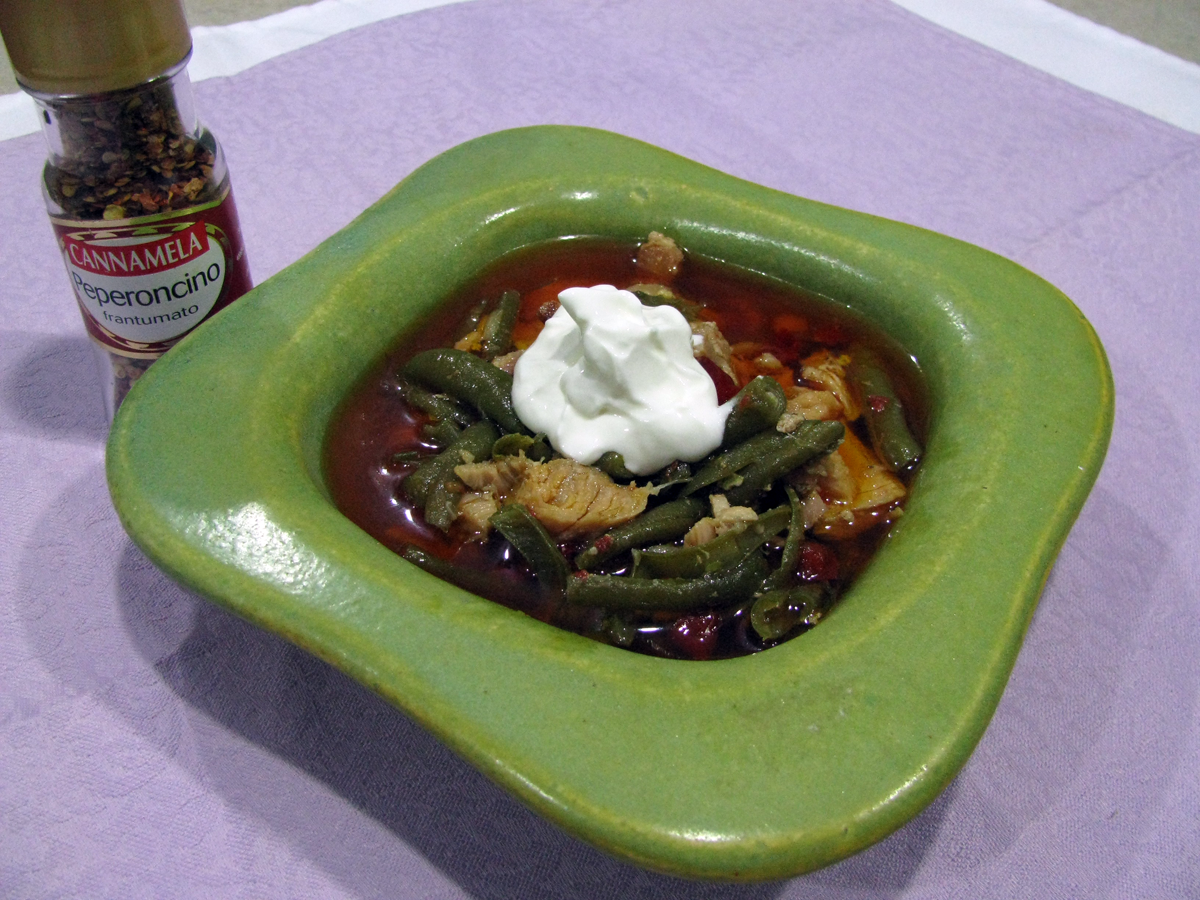
Low Carb Hearty Chicken Soup Recipe

The mum-in-law made this for dinner tonight and it was delish! It's pretty easy to make too, and something you can walk away from while it's simmering. It's a good dish to make if you're busy.

Low Carb Hearty Chicken Soup

10 slices of thick bacon, chopped
1 large onion, chopped
2 c. water
3 c. chicken broth
4 lbs boneless skinless chicken thighs
4 cloves garlic
1 T. salt
1 tsp pepper
15oz can of diced red bell pepper (or equivalent fresh)
2 1/2 c. green beans, frozen or fresh from garden
sour cream for topping (optional)


In a large pot sautée bacon and onion until bacon is crisp and onion is tender.

Pour in water, 2 cups of the chicken broth, add chicken, garlic, salt and pepper. Cook until chicken is done. Remove chicken and cut up into 1" cubes.

Add chicken back into pot, and add the red bell peppers and another cup of chicken broth. Cook approximately 30 minutes.

Add the green beans and cook until the green beans are tender.

Serve hot, top with sour cream if desired. Makes about 10-12 servings.


Notes on making: We used canned red bell peppers because that was what we had on hand. Feel free to use fresh if you have it. We also used frozen green beans, as we have some frozen from our garden from last year. Also, you could chop the chicken up before cooking it if desired.

Tuesday, February 15, 2011

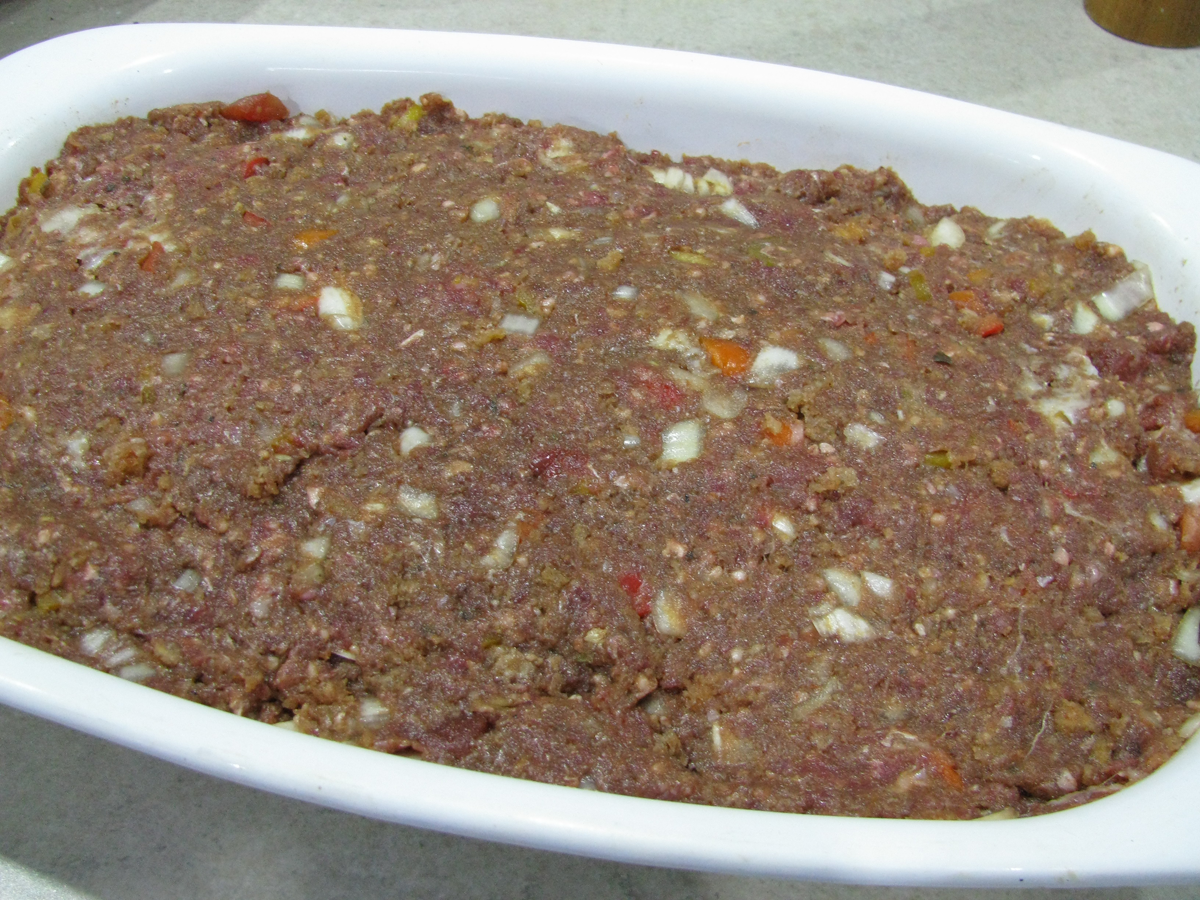
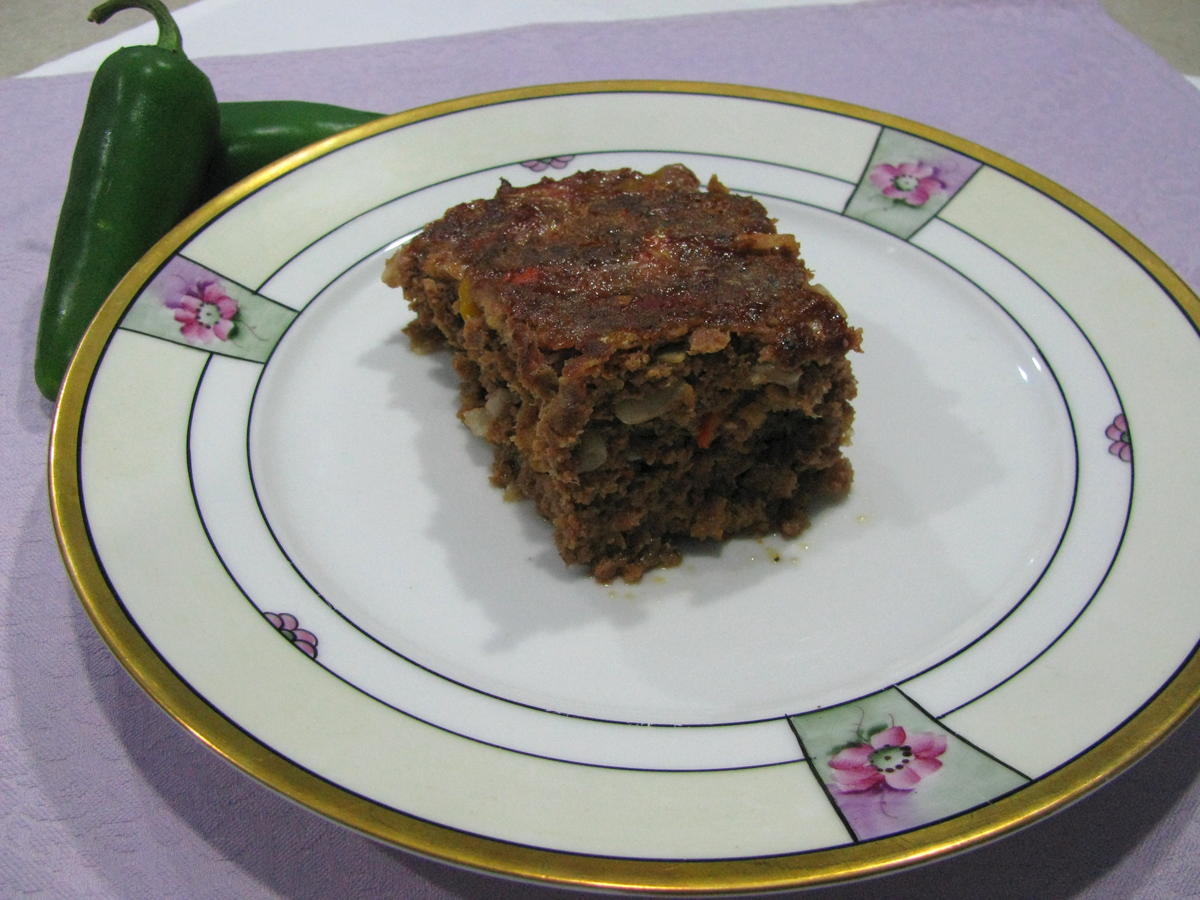
Low-Carb Venison Meatloaf : Updated

UPDATED: New Pictures 2/15/2011

We had this the other night for dinner:
Low-Carb Venison Meatloaf

2 lbs. ground venison
2 T. pure lard (not hydrogenated crap)
2 eggs
2 c. pulverized pork rinds (put them in a zippy bag and use a rolling pin on them)
2 tsp salt
1 c. chopped onions
1/2 c. chopped green peppers (or sweet peppers)
15 oz. tomato sauce (or spaghetti sauce, make sure it doesn't have any added crap)

Mix all this in a large bowl until all ingredients are well mixed. Put into a casserole pan. Bake at 350 degrees for about an hour. Everyone here thought it was very tasty!

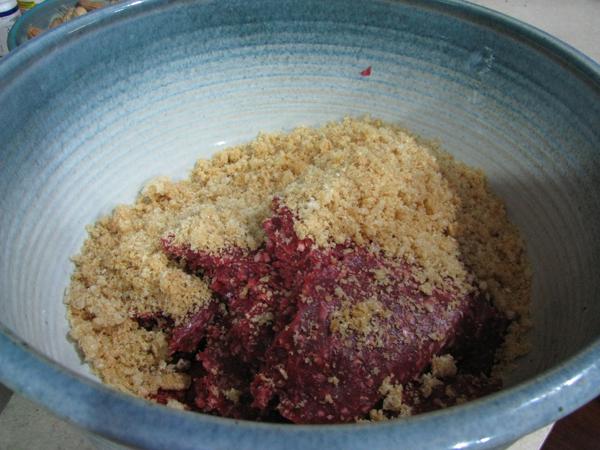
New Pics!

We made this again tonight (the 15th) and I took pictures so I could update this post. I think we put in more peppers than the recipe calls for, so take note.


Venison and ground pork rinds


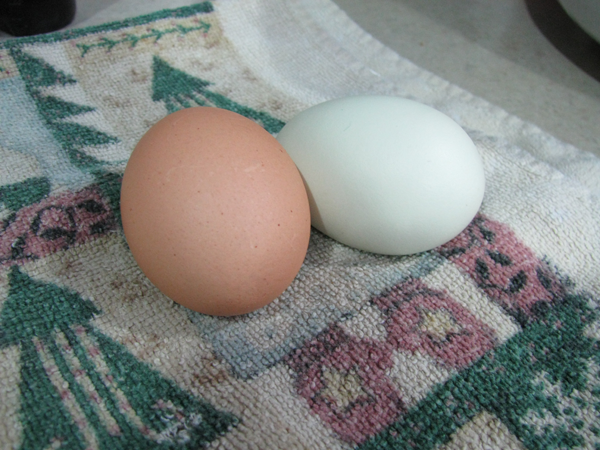
Fresh Yard Eggs, and yes that is a green egg! I think the lady has some Araucana chickens.


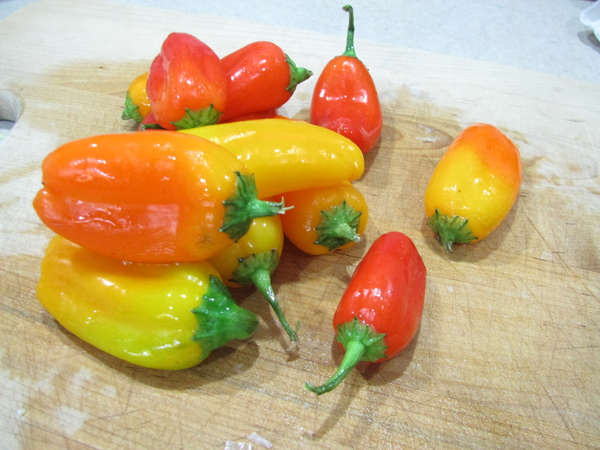
Colorful peppers


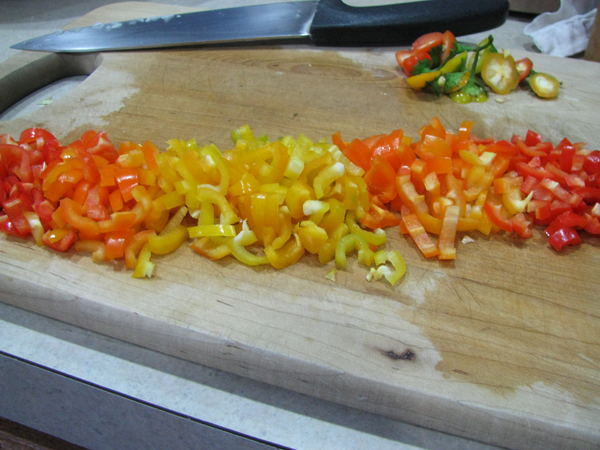
Peppers are chopped


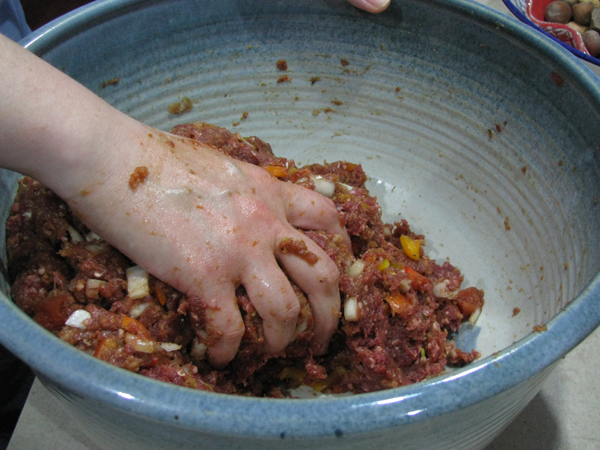
Mixing it up


In the pan, ready for the oven


And the final piece, enjoy!


Thursday, February 10, 2011

Parrot: "I'm a doctor!"

Are writers incapable of researching stuff before parroting what they're told? Are editors? I hope some are, but it seems like the majority aren't.

For example, this article from US News states that eating too much sodium leads to high blood pressure. Except it doesn't. A dietary reduction in salt can lead to a whopping 1.1 to 5 mmHg at *most*, if you believe meta-analysis. I'm completely underwhelmed. Most high blood pressure is genetic and diet has very little to do with it. If your blood pressure is high you need medication. That's about the only thing you'll hear me say that you need medicine for.
From the article:
"As a family doctor, I've observed that more and more of my practice is devoted to preventing and treating nutrition-related disorders such as high blood pressure, obesity, and diabetes. So I had hoped that the new dietary guidelines would provide me with concrete strategies for helping change my patients' eating habits for the better."

Why don't these doctors do some research instead of relying on Big Brother, er, I mean the government to tell them what to tell their patients? I guess they're too busy to read anything. Or to think for themselves. I find all kinds of interesting information simply searching Science Direct or even google. If they'd recommend to their patients to eat low-carb or paleo, most of their patients' health problems would improve and/or resolve themselves. In fact, I'd bet money on it. I'd even bet a million dollars. I could definitely use a million bucks.

Maybe they're scared? Taubes said in Why we get fat that no doctor was ever sued for recommending a low fat diet. I guess the acceptable killing of patients via the low fat nonsense is preferable to a lawsuit.

Insulin Resistance and Response

I've spent my day reading all about insulin resistance and insulin response. It's a very fascinating subject.

What prompted this was that I saw arguments on some forums that insulin has a short half-life, therefore it cannot have an adverse impact on tissue. I think that this is quite frankly, codswallop. Not because it's been proven one way or the other, but because the amount of time (or exposure) is not the only thing that determines damage. Frequency is just as important to take into consideration. Temporary high blood sugar spikes could possibly damage your internal organs. If it happens once, it might not be a problem, but when it happens repeatedly every day, over the course of time, it would come as no surprise if organ damage developed. Insulin does indeed have a short half-life, it is estimated to be between 9 and 16 minutes in humans.

However, this does not mean that insulin does it's job in this amount of time, nor does it mean that insulin is reduced completely in that amount of time. By definition, a half life is the amount of time it takes half of the thing in question to decay. Because it is always half, if you understand basic math, you will realize that it's exponential as to how long it takes for something to be cleared completely1 from a system.

The math is for n, the number of half lives elapsed, the percentage remaining is 100/(2^n). This does not tell you how much is left after n cycles, the quantity being dependent upon the initial amount produced or in the case of insulin, secreted. It takes five half-lives for complete decay to be achieved. This means that after a meal insulin is in your blood at higher than basal levels for at least 45 to 75 minutes based on the 9 to 16 minute half-life. However, in real life, it may be much longer. Insulin remained elevated in subjects after a meal for more than 120 minutes in this study. If you are eating high carb meals with snacks in-between, how often do you think your insulin levels are elevated?

In a healthy person, perhaps this isn't enough time to do damage, even with frequency (although I doubt it, which may be why almost everyone becomes insulin resistant at some point, even if it's when they're old). However, a lot of people become insulin resistant when young. Insulin resistance means that your cells are unable to use the glucose in your blood. Insulin secretion will continue in waves so long as glucose levels in the blood are raised. If glucose levels remain elevated long enough, your pancreas' β-cells may lose their ability to produce enough glucose and this is by definition diabetes.

So is it just carbs? Not completely. If you are insulin resistant, and trying to lose weight, one reason why it's very important to make sure that on a low carb or paleo diet that a good quantity of your diet is from fat, is because protein can cause an insulin response just like carbohydrates. So get the 'low fat' crap out of your head! One study showed that consuming a steak could cause plasma insulin levels to rise nearly 100 pmol/l above fasting levels, whereas cod fillet only caused a rise of 50 pmol/l. This may very well be because steak has about twice the protein as cod fillet. According to caloriecount.about.com, one ounce of steak has between 7.7 and 8.6g of protein (depending upon the type of steak). The same amount of cod fillet has 4.8g of protein. The study's authors say the difference in insulin response could also be attributed to carnosine, a dipeptide which is found in beef but not cod. Regardless, lean meat can cause an insulin response.

Keep in mind that protein is vital for rebuilding muscles, and if you're weightlifting you may need more than someone who's not.

Now, what do all these studies mean? Not a damned thing if you ask me. Honestly, the people funding the study influence the results. The data can really be interpreted to mean anything. And I do mean anything. We now know that cholesterol doesn't cause heart disease, but rather inflammation and homocysteine probably do. And yet there are dozens of studies about the nefarious effects of cholesterol, most of them poorly done, and the data manipulated to say what the researchers wanted to be said.

So, what causes insulin resistance? It seems no one is very sure, and there may be multiple causes. Some say it's chronically elevated insulin due to elevated blood glucose from over consumption of carbohydrates. Some of it is probably genetic. Whatever causes it, eating low carb or paleo is beneficial, as it reduces inflammation and makes insulin resistance unlikely. Indeed, though it is anecdotal, many people have noticed improved glucose tolerance after eating low carb for a long time.


1 Insulin is never completely cleared from our system. We secrete insulin in small amounts every few minutes, even when we haven't eaten.